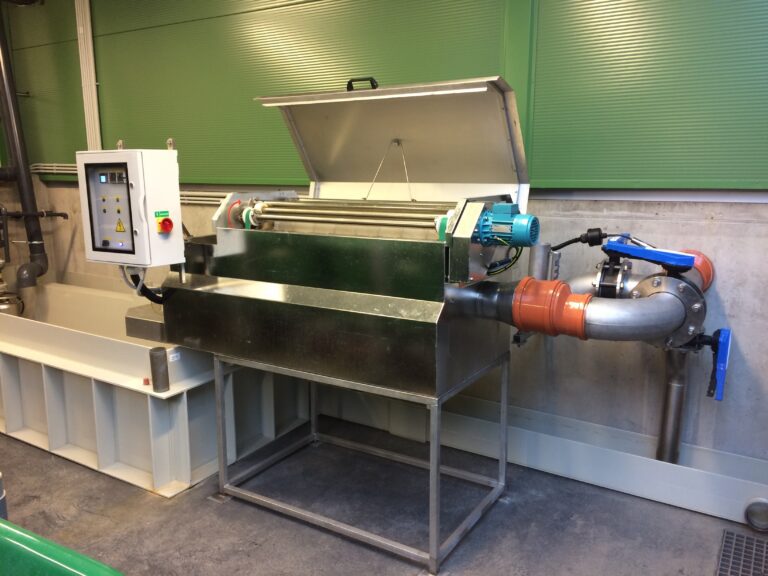
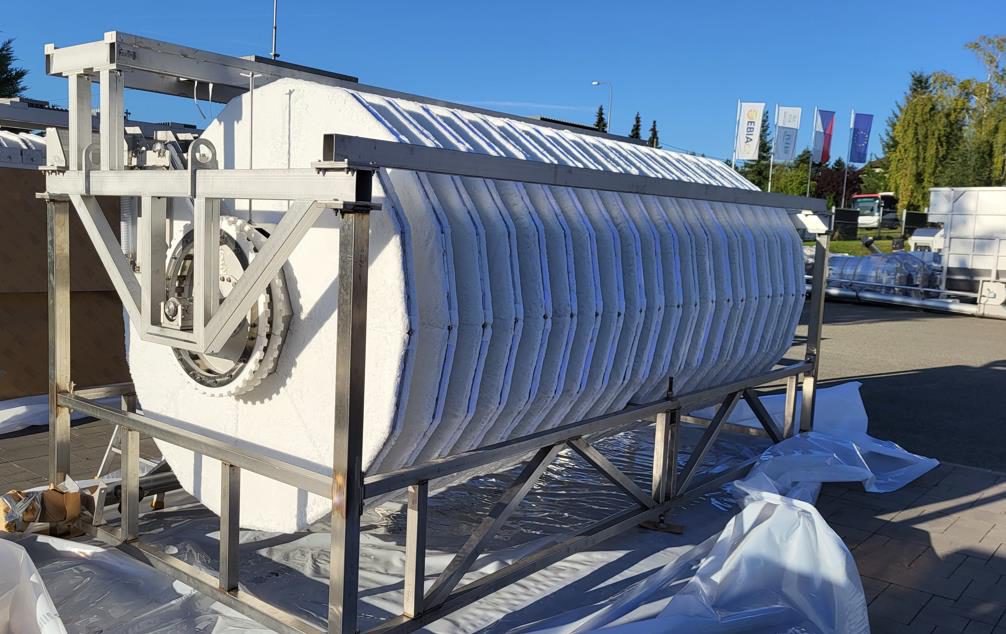
Try, for example, Pre-cleaning or Pile Cloth Filter.
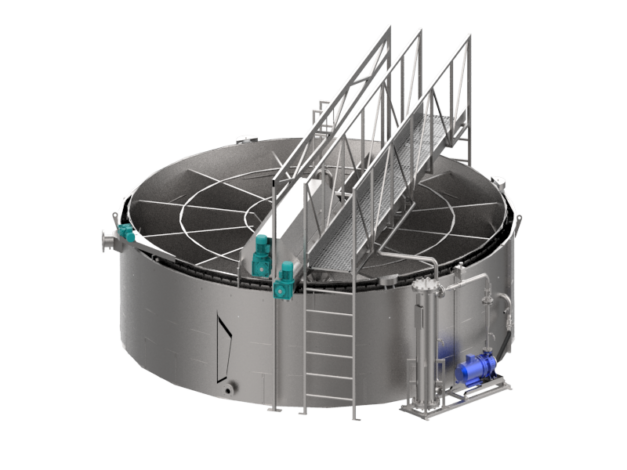
DAF Circular
Reliable and economical solution for wastewater pre-treatment Flotation
DAF Circular enables the removal of larger amounts of TSS and fats from concentrated industrial wastewater and also the production of thickened sewage sludge. Flotation is appropriate wherever filtration or sedimentation cannot be used or where the process would be uneconomical.
Photos from apps
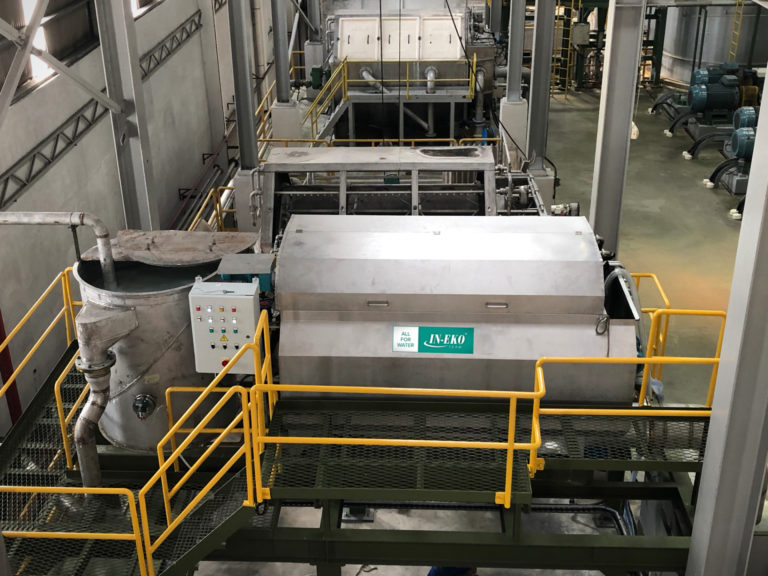
Size ranges
types according to volumetric capacity
Design
stainless steel AISI 304 / 316 or higher
Control
level probe + PLC, SCADA connection
Design
flocculation, coagulation / mechanical solution without chemical precipitation
DAF Circular for industrial applications
In industry, flotation is one of the most effective technologies for the pre-treatment of process and wastewater, especially where other methods fail. It is mainly used in sectors with high TSS, FOG (fats, oils and grease), and organic loading:
- food industry – dairies, slaughterhouses, meat processing, fish farms, snack production, starch plants,
- beverage industry – breweries, wineries, soft drink plants,
- chemical and petrochemical industry – removal of oils, emulsions, and fine suspensions,
- automotive, engineering, metal industry – separation of oils, emulsions, and fine metal particles,
- textile and paper industry – capture of fibers, fillers, dyes, and colloidal substances,
- glass fiber production, pharmaceutical production, tanneries
Flotation is in demand here for its ability to significantly reduce operating costs, stabilize downstream treatment stages, and meet even very strict discharge limits.
DAF Circular for municipal applications
Flotation is the ideal solution for applications where very high pre-treatment or polishing efficiency is required. It is particularly suitable
- for removing fats, oils, and floating matter at the inlet,
- as a tertiary or quaternary stage – to achieve strict COD, BOD, TSS, and phosphorus limits,
- in biological treatment systems with high loading – where it relieves the biological line and stabilizes operation,
- for small and medium-sized WWTPs – where it replaces several units at once thanks to its compact design
Flotation helps meet even the strictest discharge water quality standards, minimizes operating costs, and provides fast separation even with fluctuating influent quality.
Benefits of IN-EKO TEAM solutions
- capture of up to 98% of suspended solids
- option to operate with chemical precipitation
- high pollutant reduction – high quality of treated water and separated sludge
- fully automated operation
- separation of difficult-to-settle particles
- highly efficient saturation system with nozzles for even distribution of microbubbles across the entire surface
- reliable and cost-efficient operation
- low operating costs
- remote monitoring – Industry 4.0
Our tailor-made solution for applications with high requirements for effluent water quality
Expected pollutant reduction
COD 55–80%
BOD₅ 55–80%
TSS 80–95%
FOG 80–95%
BOD₅ removal depends on the type of wastewater.
Design and technical benefits
- equipment fitted with its own control cabinet with display for complete control of the entire technological unit, including chemical precipitation
- uniquely sophisticated system for generating air bubbles and transporting them into the active process
- highly efficient mixing pipework (modification with chemical precipitation)
- height-adjustable skimming device
- sediment sludge removal by pneumatic gate valve or progressive cavity pump
- fully automatic control system
Variability
- different sizes according to WWTP requirements and character
- optimization according to the material being removed
- adaptation to specific conditions
Smarter operation through innovation
In cooperation with partners, we develop solutions that reduce environmental impact – from energy-efficient components to digitalized operation and remote equipment monitoring.
Sustainability as a foundation
From design to operation, our technologies are created to save resources, energy, and space. This is not a trend – sustainability is a natural part of every piece of equipment we develop.
Our goal is to ensure clean water for future generations.
Why IN-EKO TEAM?
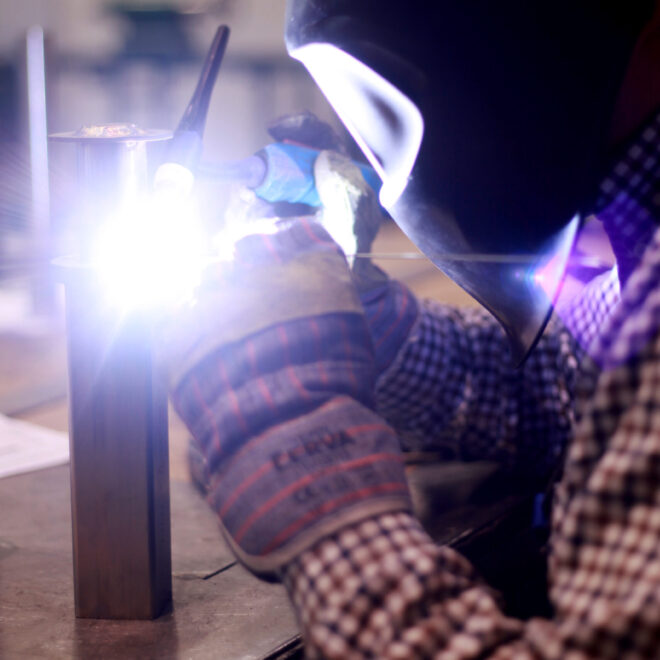
IN-EKO TEAM is a Czech technology company with its own development and research department as well as its own manufacturing facilities. We design, manufacture, and supply top-class wastewater treatment equipment – from municipal wastewater treatment plants and industrial operations to aquaculture.
Our equipment is made of high-quality stainless steel and installed in more than 80 countries worldwide. Thanks to our long-term know-how, patented solutions, and precise workmanship, we offer our partners the reliability of efficient equipment with a long service life, together with after-sales service and commercial support.
We are your partner from the initial design through commissioning to subsequent service inspections.
O nás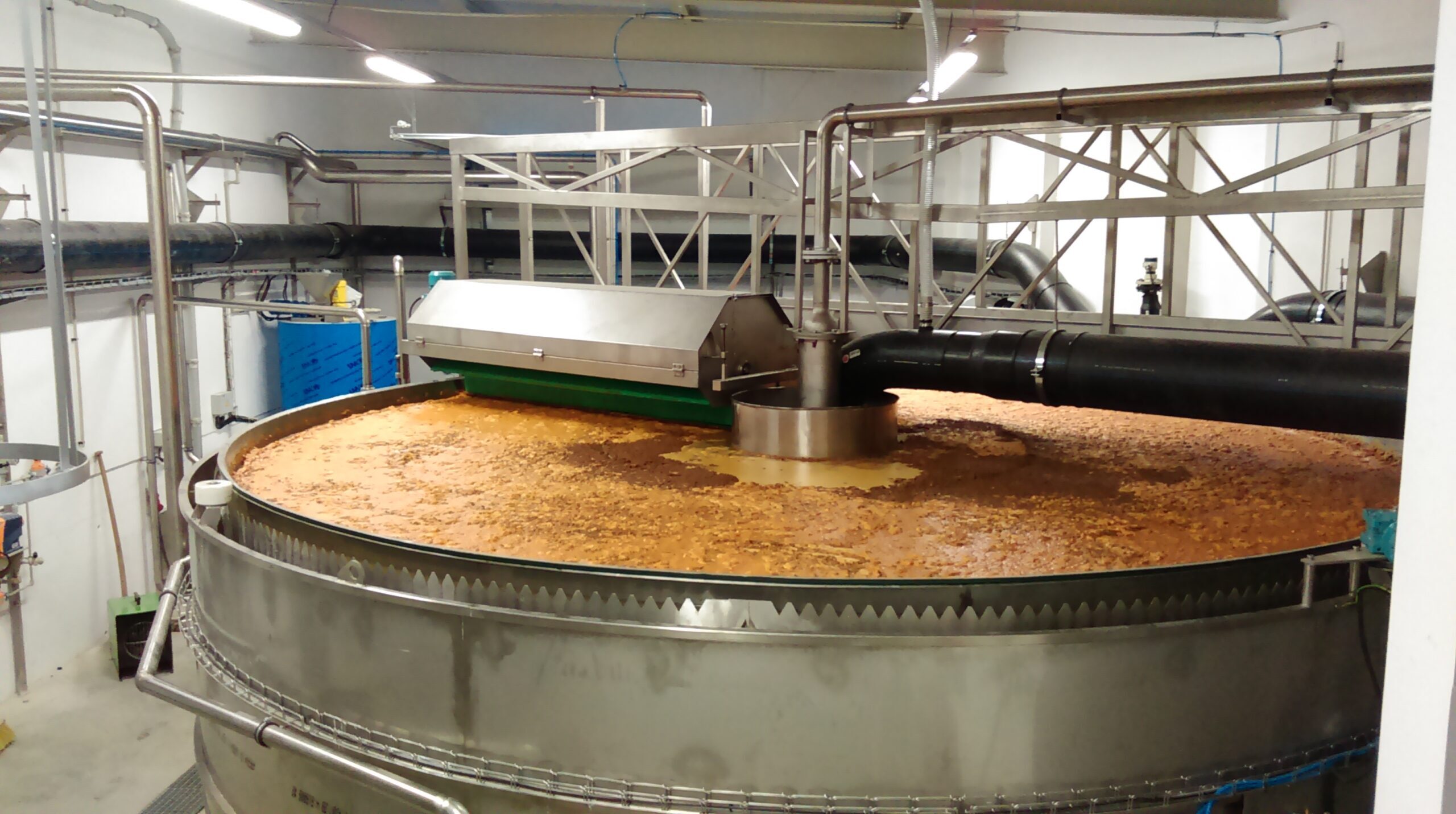
How does the DAF Circular work?
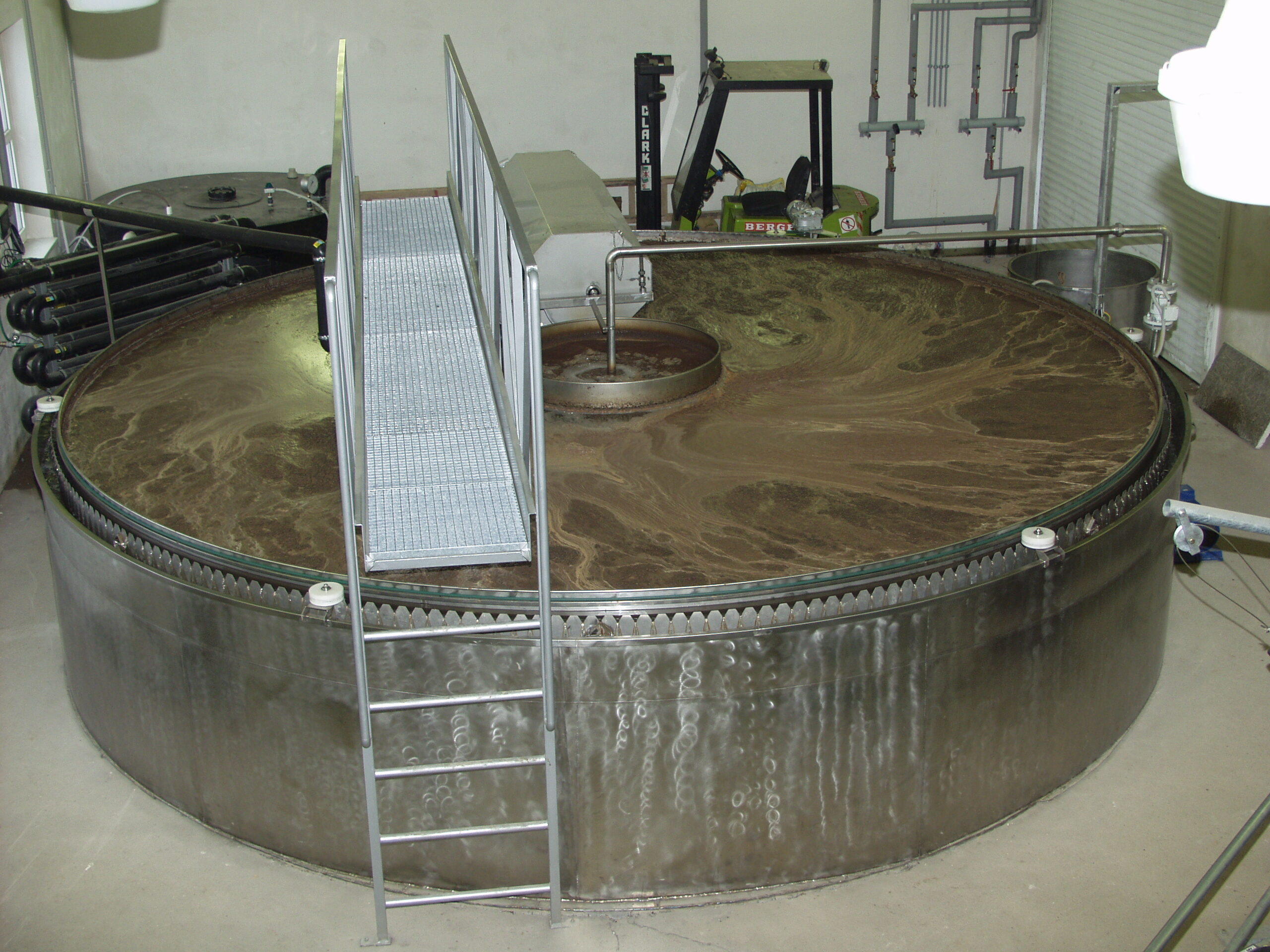
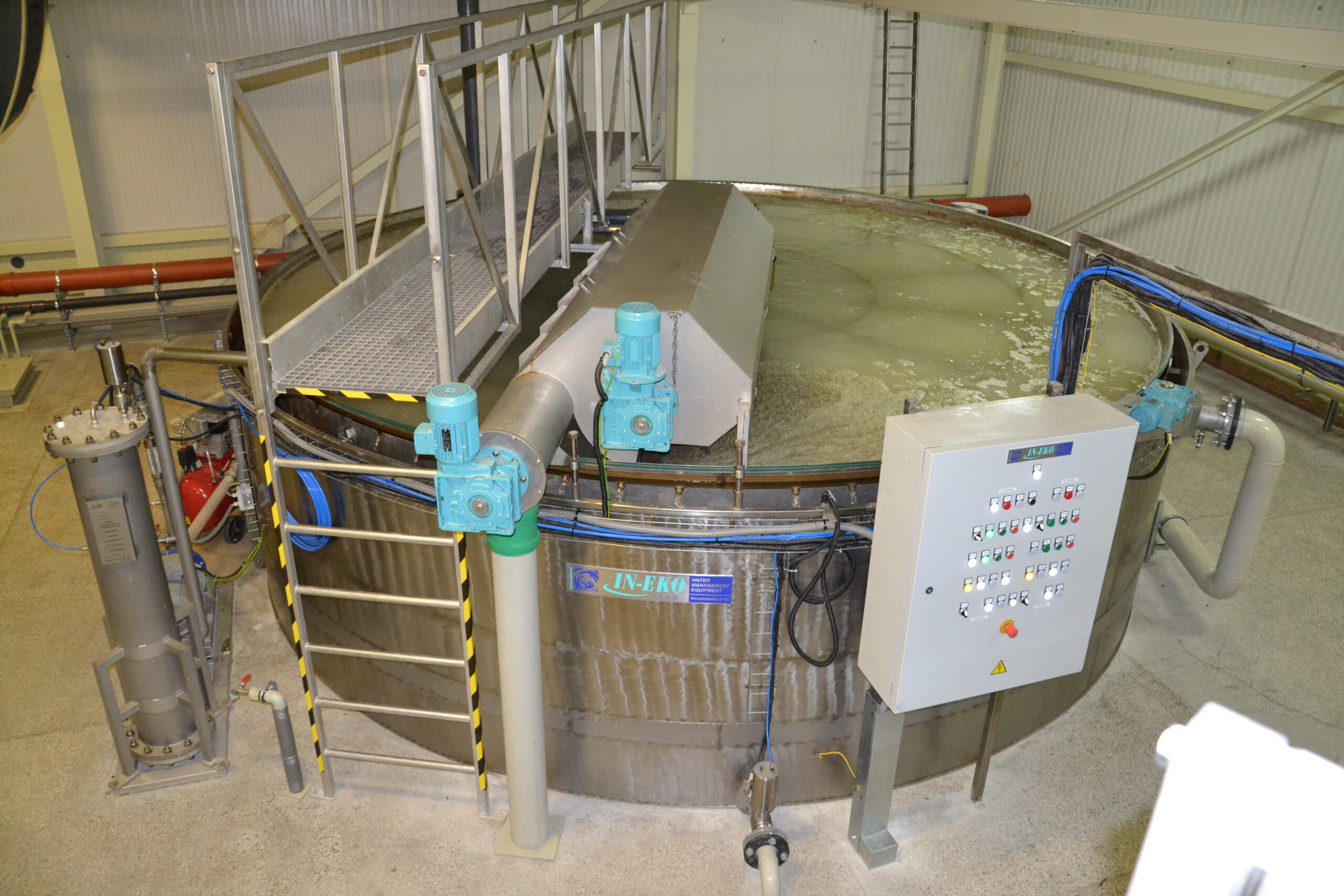
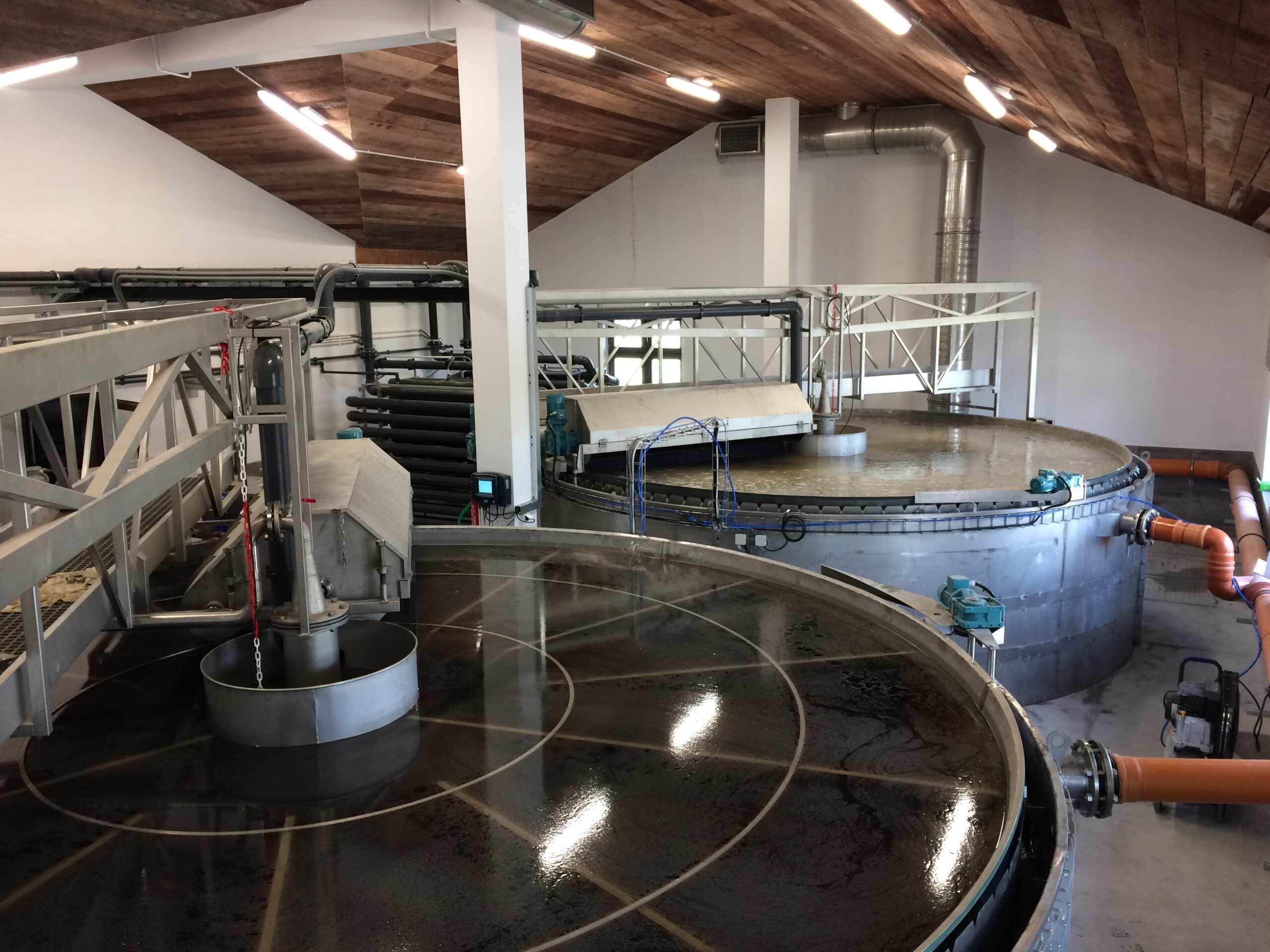
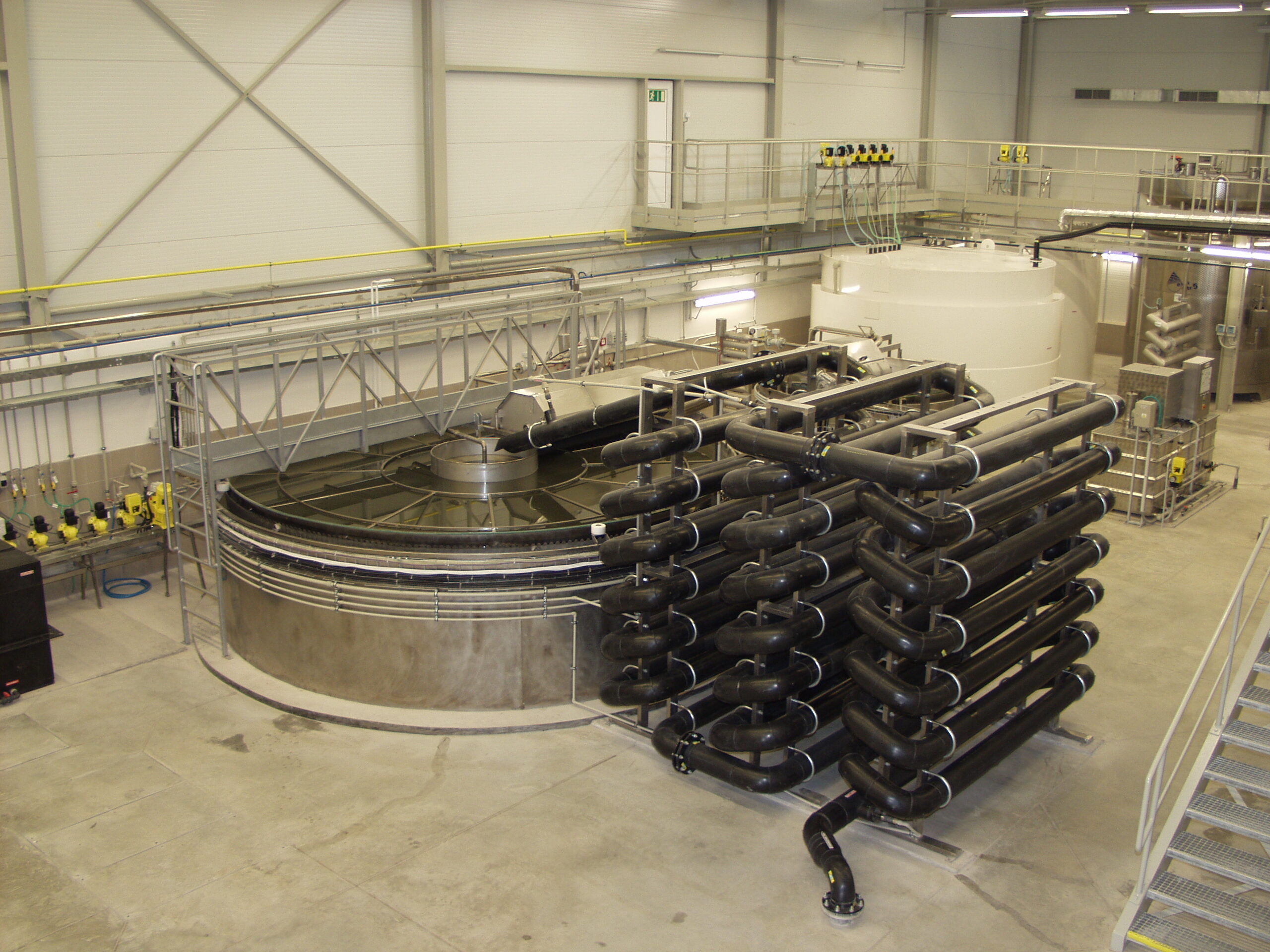
Raw water and saturated recirculated water are fed through separate pipes into the central inlet section. The sludge skimming device is fixed at one point in the tank and is height-adjustable.
Recirculated treated water is taken by the flotator pump and in the saturation unit air is added to this water in the required amount.
The saturated recirculated water is usually conveyed through the center of the tank from above via piping ending in a special pressure nozzle above the tank bottom.
The incoming raw water is usually supplied from above through a pipe terminated tangentially into the inlet section, through which it progresses to the center of the tank above the recirculated water, which after passing through the pressure nozzle and releasing internal pressure contains a large amount of very small air bubbles.
As the bubbles pass through the raw water, undesirable substances contained in it are captured on them and carried together with the bubbles toward the surface, where they form a foam layer from which water is gradually displaced downward. The density of the removed sludge increases with the height of the foam layer on the flotator surface.
The densest surface sludge layer is continuously removed from the entire flotator surface at an adjustable thickness of 3 to 30 mm. This allows the density of the removed sludge to be varied over a wide range.
For this purpose, chemical units – storage tanks for coagulant and caustic – are added to the unit. The storage tanks also include a dosing pump.
All our units are designed for fully automatic operation. A typical example is excess sludge thickening at municipal WWTPs or separation of substances from industrial wastewater – dairies, slaughterhouses, meat plants, tanneries, chemical industry, etc.
Clean water is no coincidence.
It is technology.
WWTP
Aquaculture
Industry