
Try, for example, Pre-cleaning or Pile Cloth Filter.
Sand separator – SP
Efficient separation of sand and heavy particles from wastewater Pre-treatment
Sand separation is essential at municipal wastewater treatment plants to protect the mechanical equipment of the entire plant. It also helps prevent the formation of unwanted sediments in tanks.
Photos from apps
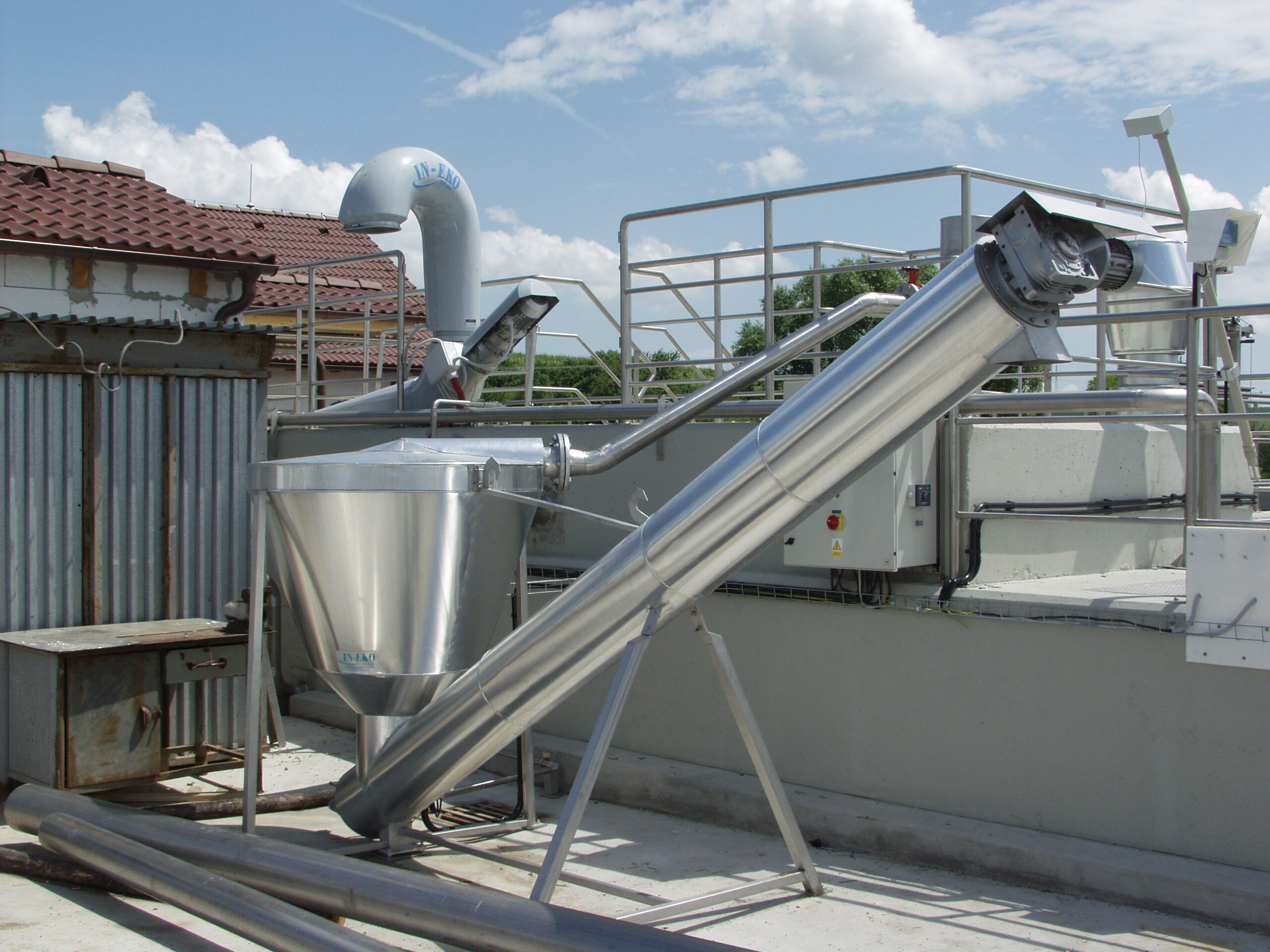
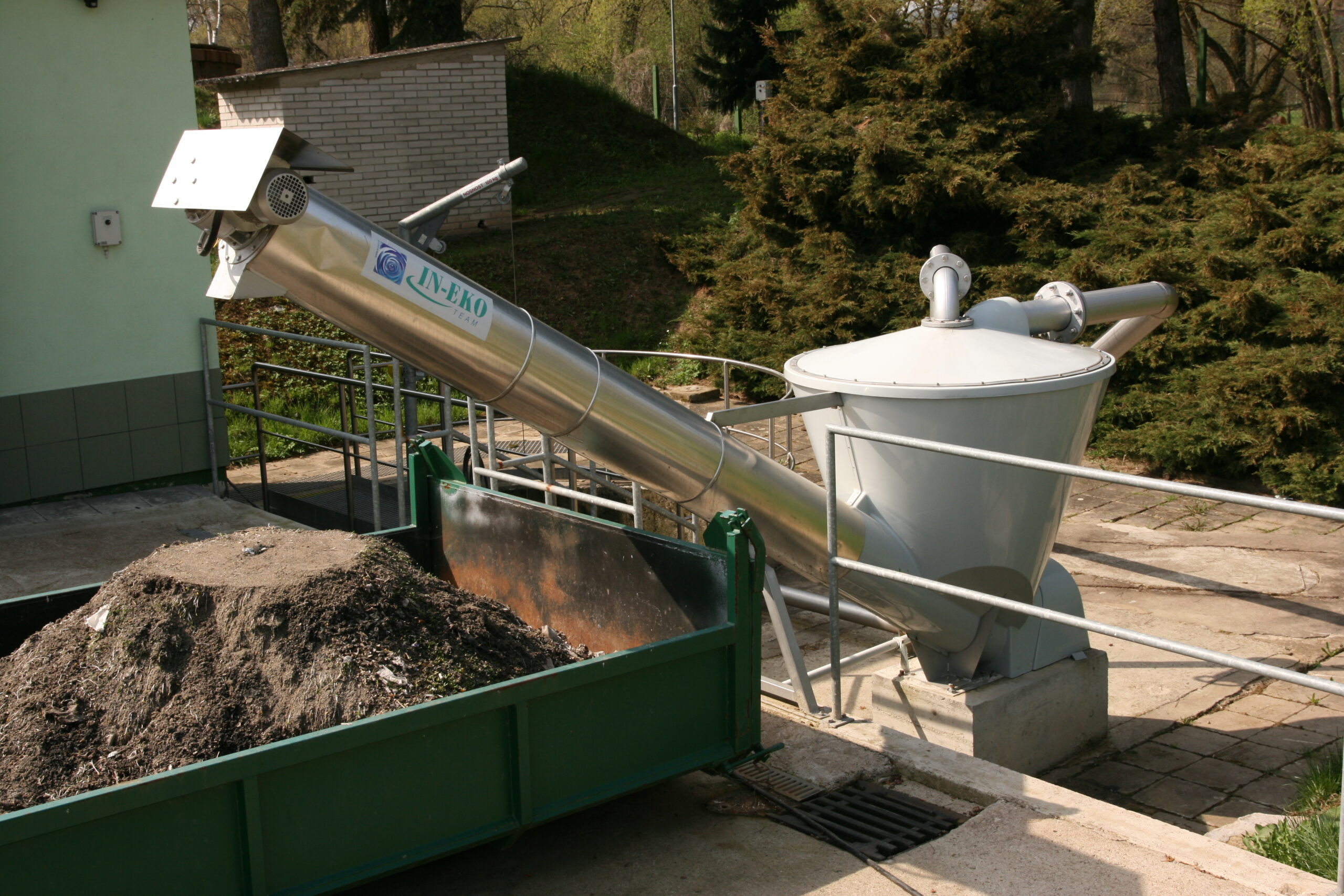
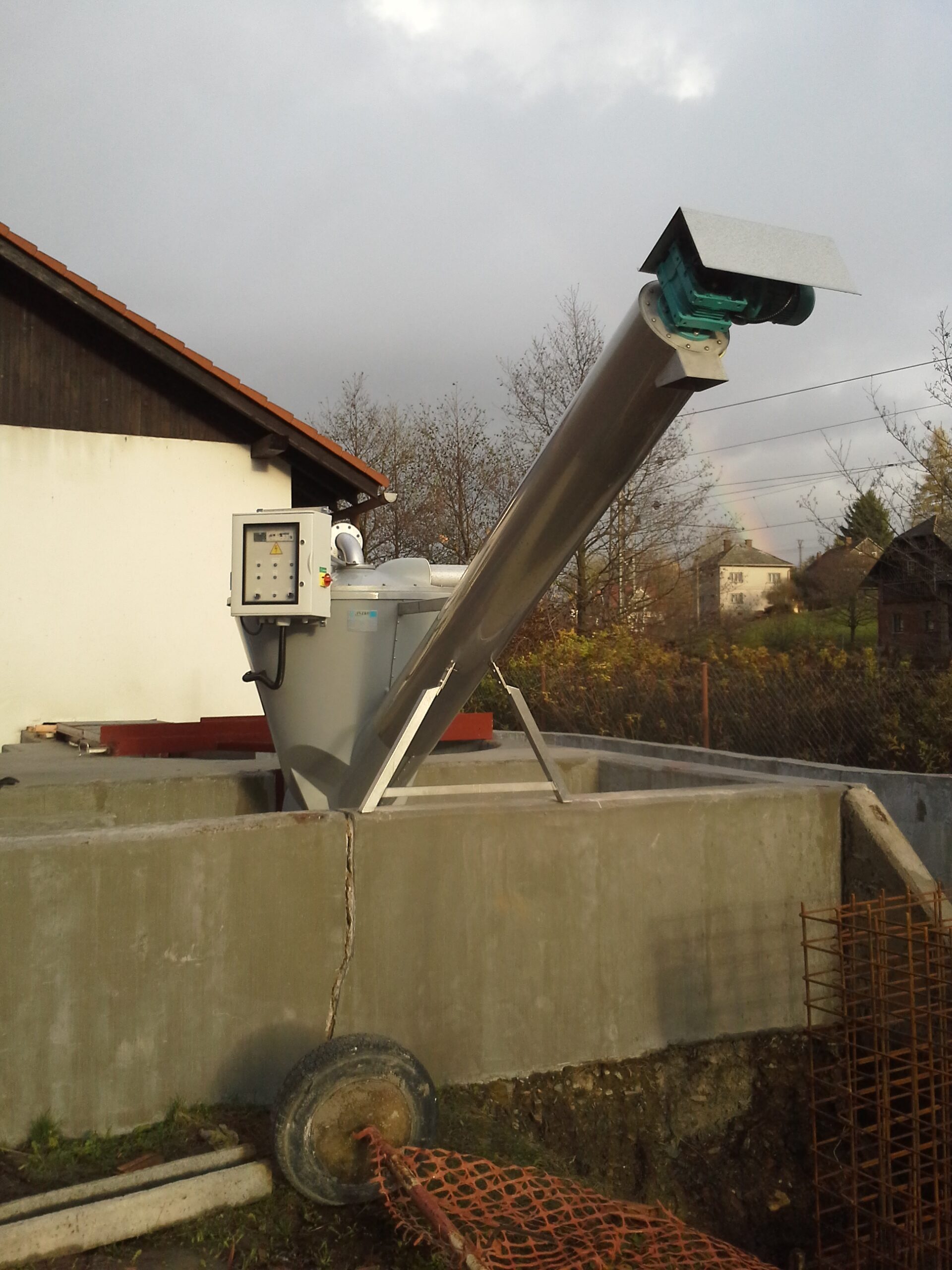
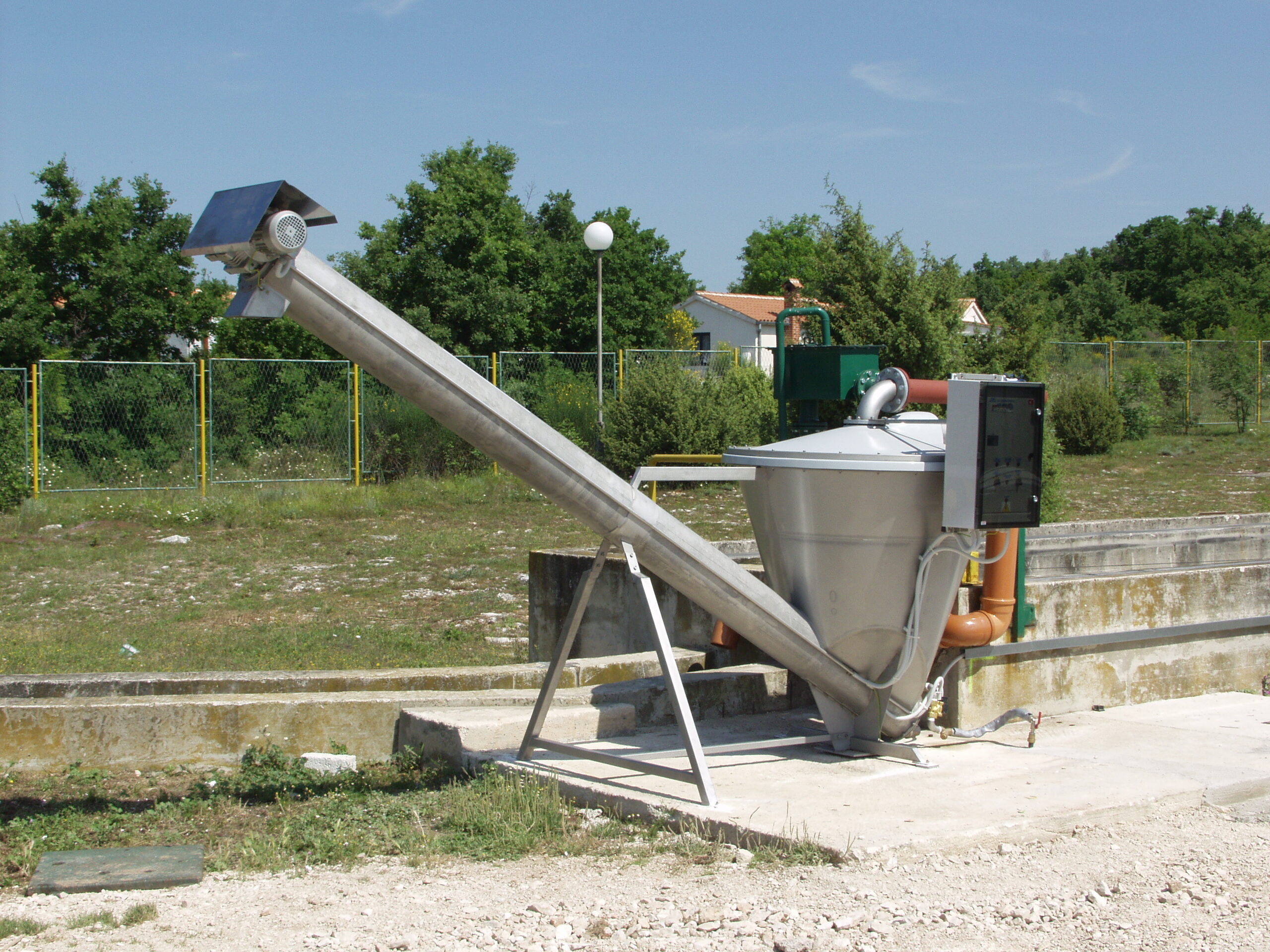
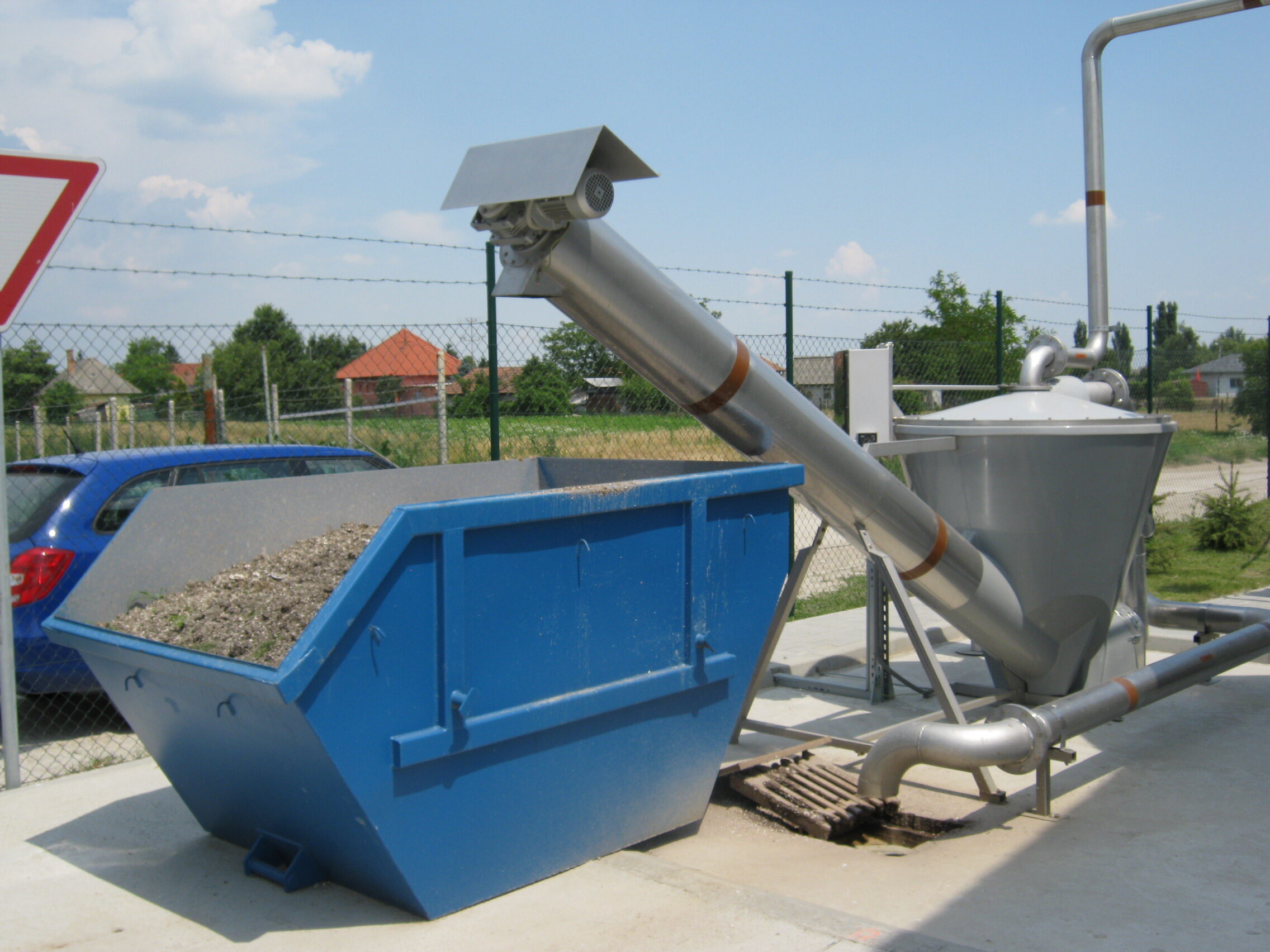
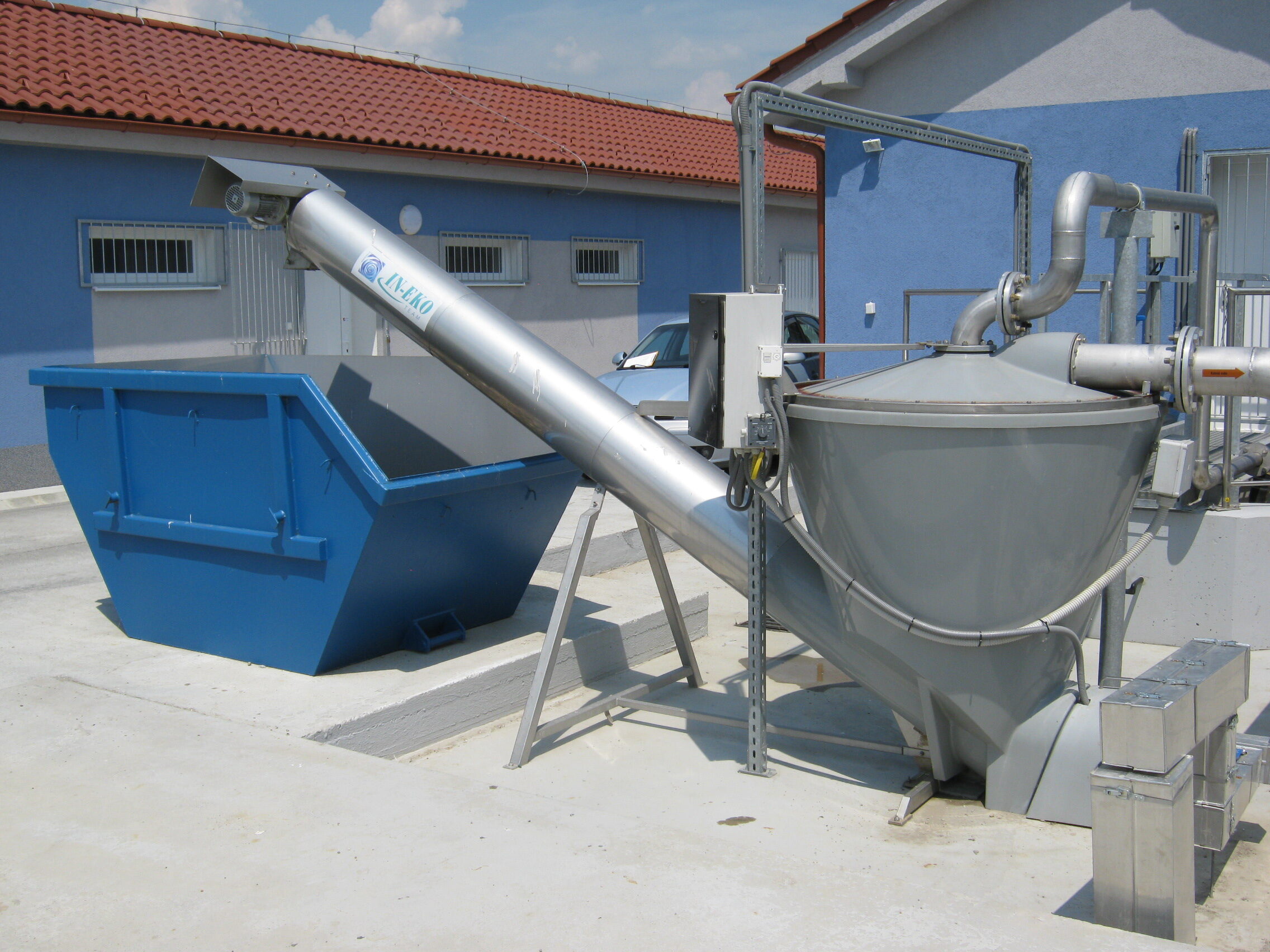
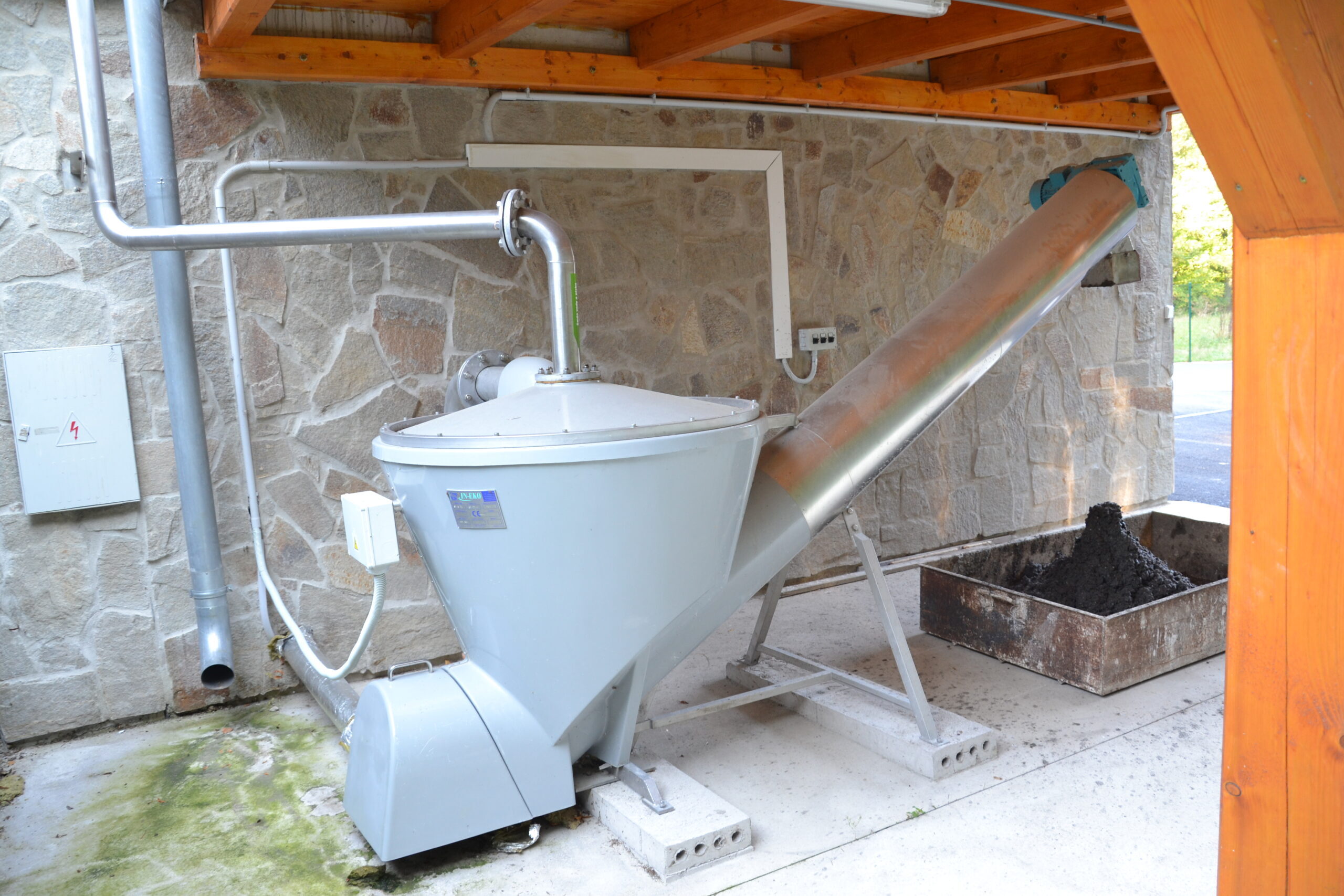
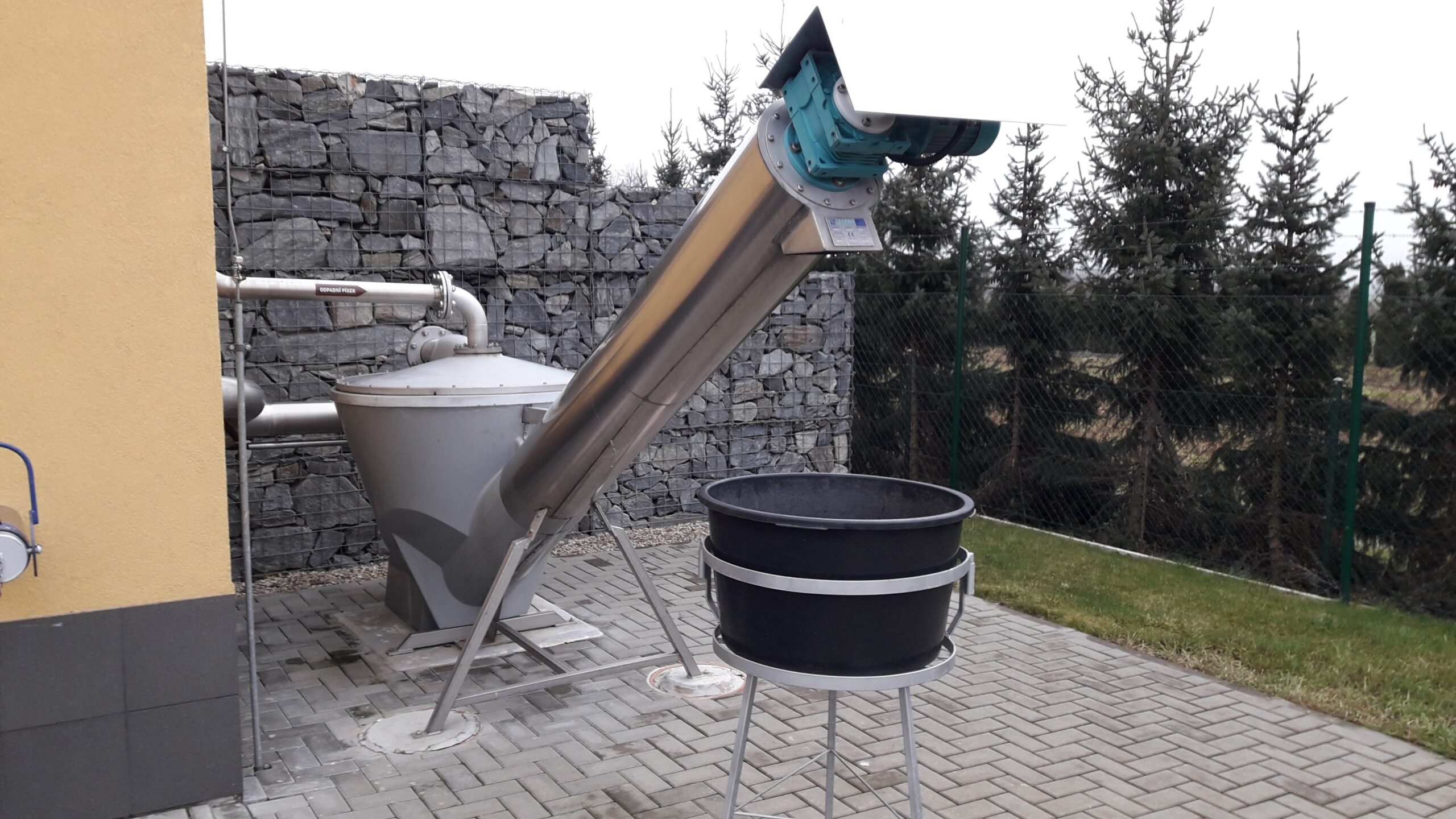
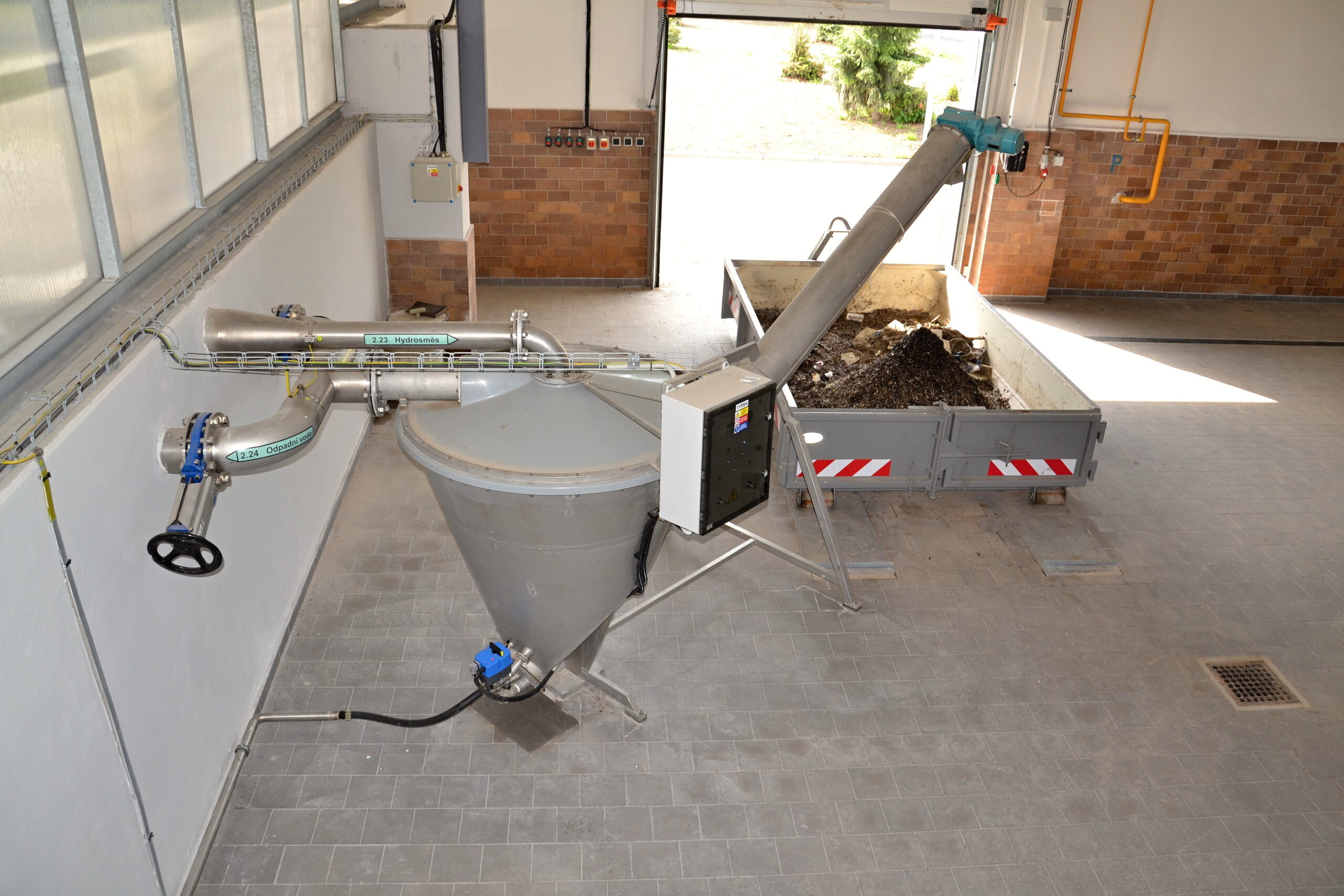
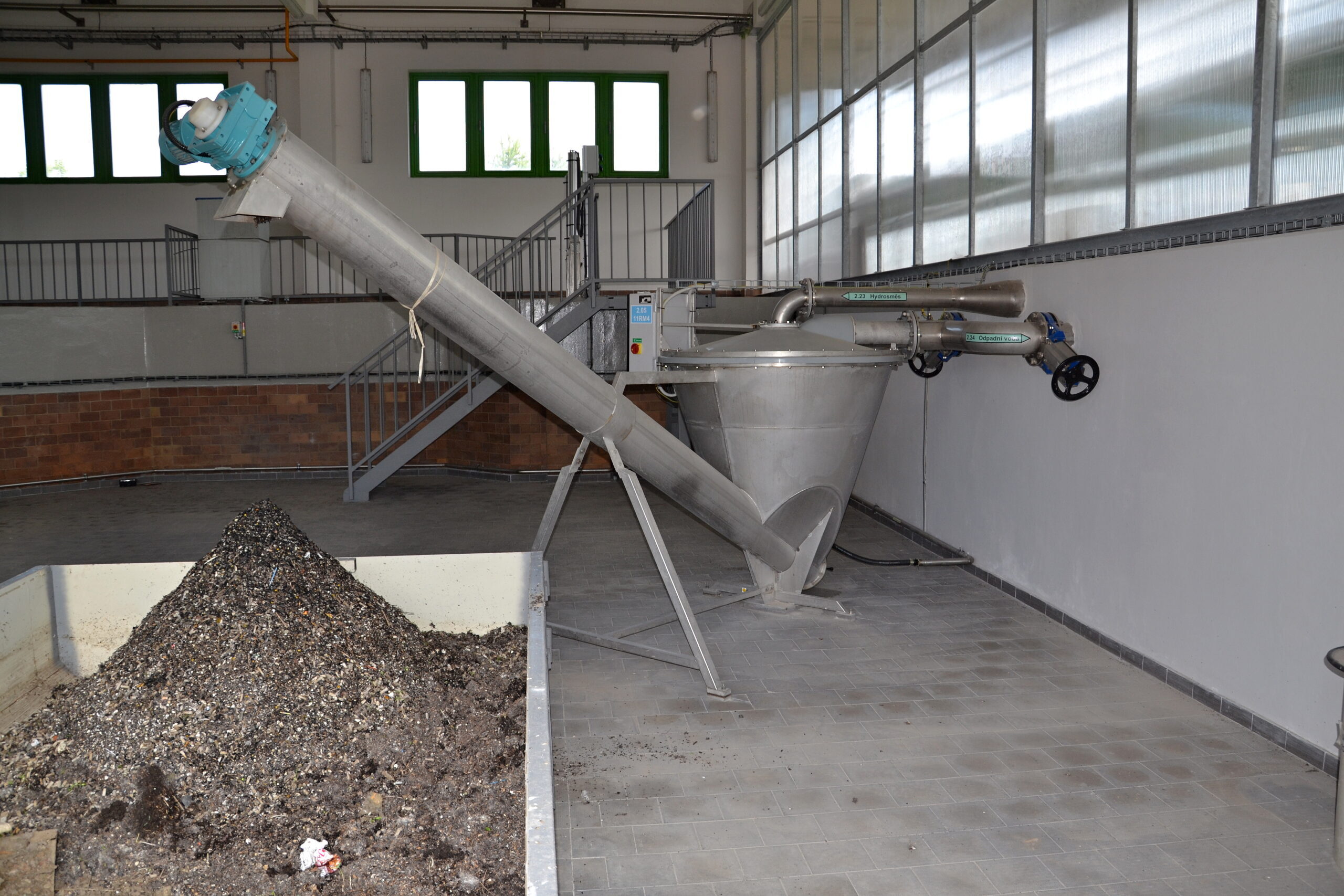
Removal of sand grains
> 0,2 mm
Flow rate
5, 10 or 15 l/s
Design
stainless steel AISI 304 / 316 or higher
Control
PLC, SCADA connection, timer
Sand separator for municipal and industrial applications
- Municipal wastewater treatment plants – at the WWTP inlet as an essential part of mechanical pre-treatment
- Industrial WWTPs – especially food processing, concrete plants, engineering, automotive industry, textile and paper mills
- Stormwater and surface water – locations with a high proportion of wash-off solids (car parks, road drainage)
- Recirculating industrial systems – lines where water is repeatedly recirculated and must be protected from mineral particles
- Sludge and sediment treatment – removing sand before further processing protects pumps and mixers
Suitable use
The Sand separator is designed to separate sand and other heavy particles from a mixture of water and undissolved solids dispersed in the water. In addition to sand, the water usually also contains a large percentage of floating impurities or particles with a density close to that of water. This composition is particularly typical of municipal wastewater.
Sand removal is especially necessary in cases where, during subsequent water treatment, a substantial reduction in flow velocity would cause undesirable sand deposition in downstream technology.
The Sand separator is a device used in wastewater treatment plants to separate sand from other sedimenting particles. It usually follows a grit chamber, which is sized for the full water flow and in which sand settles together with other solid particles denser than water.
Benefits of the IN-EKO TEAM solution
- depending on the inflow, sand grains larger than 0.2 mm can be removed
- hydraulically balanced design prevents short-circuit flows
- integrated sand washing
- fully automatic operation
- remote monitoring – Industry 4.0
Optional modifications
- insulation option – outdoor installation of the separator
- option to extend the screw conveyor
Smarter operation through innovation
In cooperation with our partners, we develop solutions that reduce environmental impact – from energy-efficient components to process digitalisation and remote equipment monitoring.
Sustainability as a foundation
From design to operation, our technologies are built to save resources, energy and space. This is not a passing trend – sustainability is a natural part of every piece of equipment we develop. Our goal is to ensure cleaner water and long-term balance in nature.
Technology hub
Why IN-EKO TEAM?
IN-EKO TEAM is a Czech engineering company with its own development and research department as well as its own production facility. We design, manufacture and supply top-quality equipment for wastewater treatment – from municipal wastewater treatment plants and industrial operations to aquaculture.
Our equipment is made of high-quality stainless steel and has been installed in more than 80 countries worldwide. Thanks to our long-standing know-how, patented solutions and precise workmanship, we offer our partners the confidence of efficient equipment with a long service life, along with subsequent service and commercial support.
We are your partner from the initial design through commissioning to follow-up service inspections.
O nás
How does the Sand separator work?
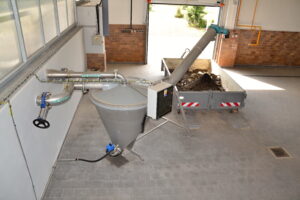
At regular intervals, sand together with water and other particles is conveyed to the sand separator, most often by an air pump or by gravity inflow. Here, controlled sedimentation takes place and the sand is separated from the other particles brought from the grit chamber.
The operating principle is based on the different densities of water and sand. While the density of water is approximately 1 g/cm³, the density of sand is about 2.6 g/cm³ (derived from the density of quartz). The resulting separation efficiency of particles heavier than water is determined by the retention time required for the particles to settle. The sedimentation rate is again determined by the density of the material.
The water entering the separation tank flows through its internal system and, during this process, the sand settles and accumulates at the beginning of the screw conveyor. There it is washed with pressurised water, while swirling light fractions are flushed into the outlet by specially shaped, directed water jets. The washed sand is conveyed away by a screw conveyor.
Clean water is no coincidence.
It is technology.
WWTP
Aquaculture
Industry
Impurity
Mechanical pretreatment of influent water for flow-through systems
Impurity
Reduction of sand disposal costs
Impurity
Separation and removal of sand
Impurity
Reduction of OPEX
Products
 Pile Cloth filter...
 Vertical Pile Cloth filter
 Pile Cloth Drum filter
 “CLEVER” Disc...
 Microscreen Drum filter
 Robust Drum filter
 Containerized modular...
 Multifunctional unit –...
 Multifunctional unit –...
 Belt screen
 Straight Screw screen
 Circular Bar screen...
 Vertical Screw screen
 Vertical Bar screen
 Sand separator – SP
 Sand separator – SPG
 Screw press
 DAF Rectangular
Pile Cloth filter...
Vertical Pile Cloth filter
Pile Cloth Drum filter
“CLEVER” Disc...
Microscreen Drum filter
Robust Drum filter
Containerized modular...
Multifunctional unit –...
Multifunctional unit –...
Belt screen
Straight Screw screen
Circular Bar screen...
Vertical Screw screen
Vertical Bar screen
Sand separator – SPG
Screw press
DAF Rectangular
Impurity
Mechanical pretreatment of industrial wastewater